5 Things Art Dealers Won’t Tell You About Buying Your First Piece
I’m a dealer. So this is a little like a magician explaining the trick but here’s the thing: the trade doesn’t actually benefit from keeping first-time buyers nervous. Nervous people don’t come back. They buy one thing, second-guess it for a year, and decide art “isn’t for them.”
It is for you. You just haven’t been told how the room works yet. So let me tell you.
Here are the five things most of us won’t say out loud and why knowing them will make your first purchase a far better one.

1. You’re allowed to negotiate
The sticker price is rarely the real price. I know that feels uncomfortable to hear, because galleries are quiet, the lighting is flattering, and nobody’s standing there with a “make me an offer” sign. But asking about price flexibility isn’t rude. It’s expected.
Dealers build a little room into most numbers precisely because serious buyers ask. You don’t need to haggle like you’re at a market stall a simple “Is there any movement on this?” or “What’s the best you can do for a first-time collector?” is completely normal language to us. The worst answer you’ll get is a polite no. The best answer might be ten or fifteen percent, a waived fee, a free shipment or a payment plan you didn’t know existed.
Silence costs you money. Ask.

2. Provenance matters more than prettiness
Where a work has been can matter more than how it looks over your sofa.
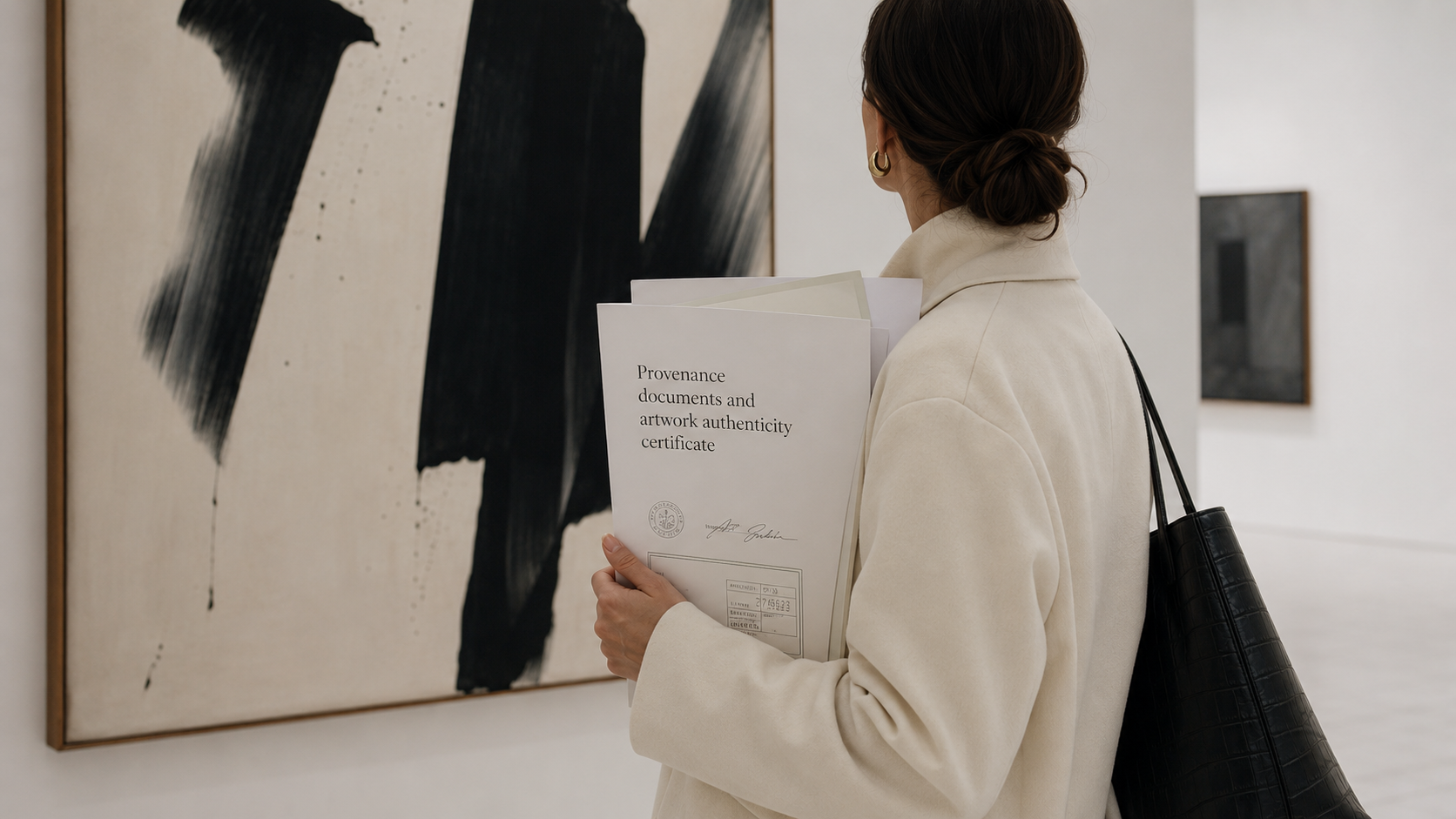
Provenance the documented history of who has owned a piece and where it’s been shown is the spine of a work’s value and authenticity. A beautiful painting with a murky past is a risk. A slightly less showstopping piece with a clean, well-documented history is an asset you can stand behind, resell, and insure without drama.
So before you fall for the colours, ask the boring questions: Where did this come from? Who owned it before? Has it been exhibited or published anywhere? A good dealer will have answers ready and be glad you asked. If the history gets vague or the dealer gets cagey, that tells you something too.
3. It’s okay to start with your couch just don’t end there
Here’s the honest version of the usual dealer advice. Plenty of people will tell you never buy art to match your sofa. I won’t, because matching your couch is often how it starts you fall for a colour, it fits a wall, it makes a room feel finished. That’s a real and valid part of the journey, not a rookie error.
But it shouldn’t stay the whole story. Cushions get replaced, walls get repainted, and the piece you bought purely to “go with” a scheme can lose its hold once the scheme is gone. So as your eye develops, start buying things you’d still love if you moved house entirely.
And here’s the part nobody mentions: it’s fine if work you bought ten years ago doesn’t move you the way it used to. That’s not buyer’s remorse that’s your taste evolving. Outgrowing a piece is proof you’ve grown as a collector. Interiors change. Taste should too.

4. Editions aren’t “lesser”
There’s a quiet snobbery around prints and editions, as if a unique one-off is automatically the “real” art and everything else is a consolation prize. That’s not how the market actually works.
A great print by the right artist can comfortably outperform a mediocre unique piece in meaning, in quality, and yes, in value. Editions are how some of the most important artists in history reached the world, and a well-made, properly numbered edition from a respected name is a genuine work of art, not a poster.
Don’t snob the format. Judge the artist, the quality, and the edition size. A first piece that’s a brilliant print you love beats a forgettable original you bought just to say it was one of one.

5. Ask about the full cost
The price on the wall is almost never the price you pay. And this is the one that catches new buyers out most often.
Framing, shipping, crating, insurance, installation, and the occasional fee you didn’t see baked in they add up fast, and they’re rarely volunteered upfront. A piece that felt comfortably within budget can quietly creep well past it by the time it’s hanging on your wall.
So ask early, before you commit: “What’s the all-in cost framing, delivery, insurance, everything?” Knowing the real number protects you from sticker shock and lets you negotiate the whole package, not just the headline figure. A dealer worth buying from will give you that breakdown without flinching.

The real secret
None of this is gatekept because it’s complicated. It’s just rarely said out loud because a confident buyer asks harder questions, and not every dealer wants that.
I do. The collectors I most enjoy working with are the ones who negotiate, ask about provenance, ignore their colour scheme, respect a good edition, and want the full number before they say yes. They buy better. They come back.
If you’re buying your first piece and you’ve got questions you’re slightly embarrassed to ask those are exactly the ones to send my way. There’s no such thing as a stupid question from a first-time collector. There’s only the question you didn’t ask and wish you had.
What’s the one thing about buying art that’s always confused you? Ask me below I’ll answer honestly.