Contemporary Art Trends 2026: Why Collectors Are Paying More for “Human-Made” Over AI-Perfect
In 2026, the art world isn’t chasing a bold new movement or a single defining “-ism.” It’s doing something quieter and, in a way, more radical: rewarding evidence that a person actually made the thing.
After years of algorithmic polish, frictionless digital production, and an oversupply of AI-generated imagery, collectors, curators, and gallerists are converging on a single idea. The most valuable art right now is the art that couldn’t have been made by a machine — and looks like it.
Here’s what’s actually driving the contemporary art market this year, and what it means whether you’re collecting, creating, or just trying to keep up.
The Big Shift: Imperfection Is the New Premium
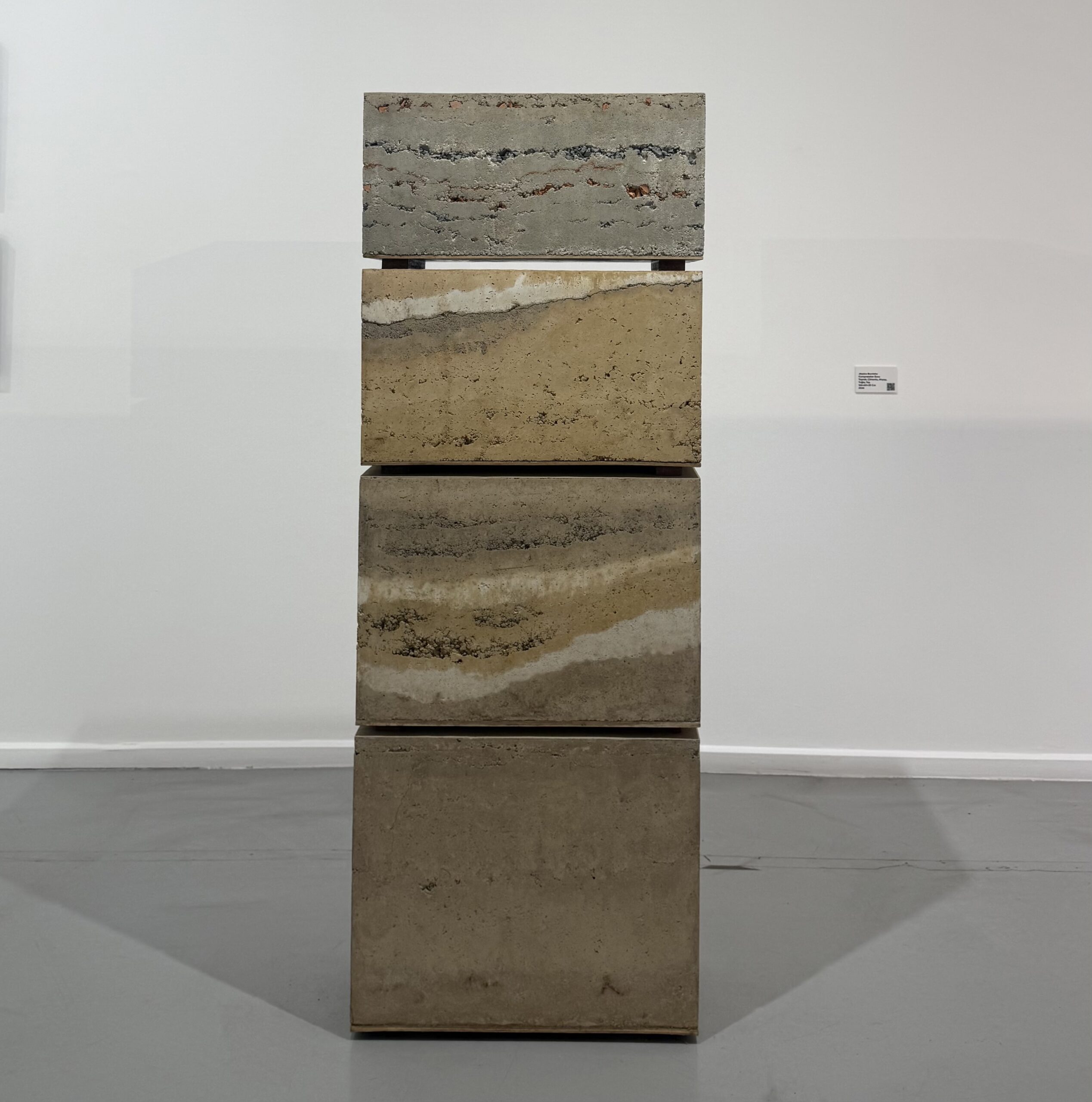
Soil, cement, wood, bricks and stones
166 cm x 60 cm x 35 cm
For most of the last decade, technical polish was a selling point. Smooth gradients, flawless renders, algorithm-friendly compositions — all of it signaled skill and market-readiness.
That premium is inverting. Across galleries and auction houses, the works pulling the strongest interest and the highest prices are the ones that visibly show a human hand: loose lines, awkward proportions, rough surfaces, and marks that could only come from intuition and risk, not a training set. Buyers aren’t just tolerating imperfection anymore — they’re paying for it, treating visible process as its own form of authentication in a market flooded with machine-made images.
This isn’t nostalgia for “the good old days” of painting. It’s a market correction. When anyone can generate a technically flawless image in seconds, technical flawlessness stops being rare — and rarity is what collectors actually pay for.
5 Contemporary Art Trends Defining 2026
1. Naïve Painting Goes Mainstream
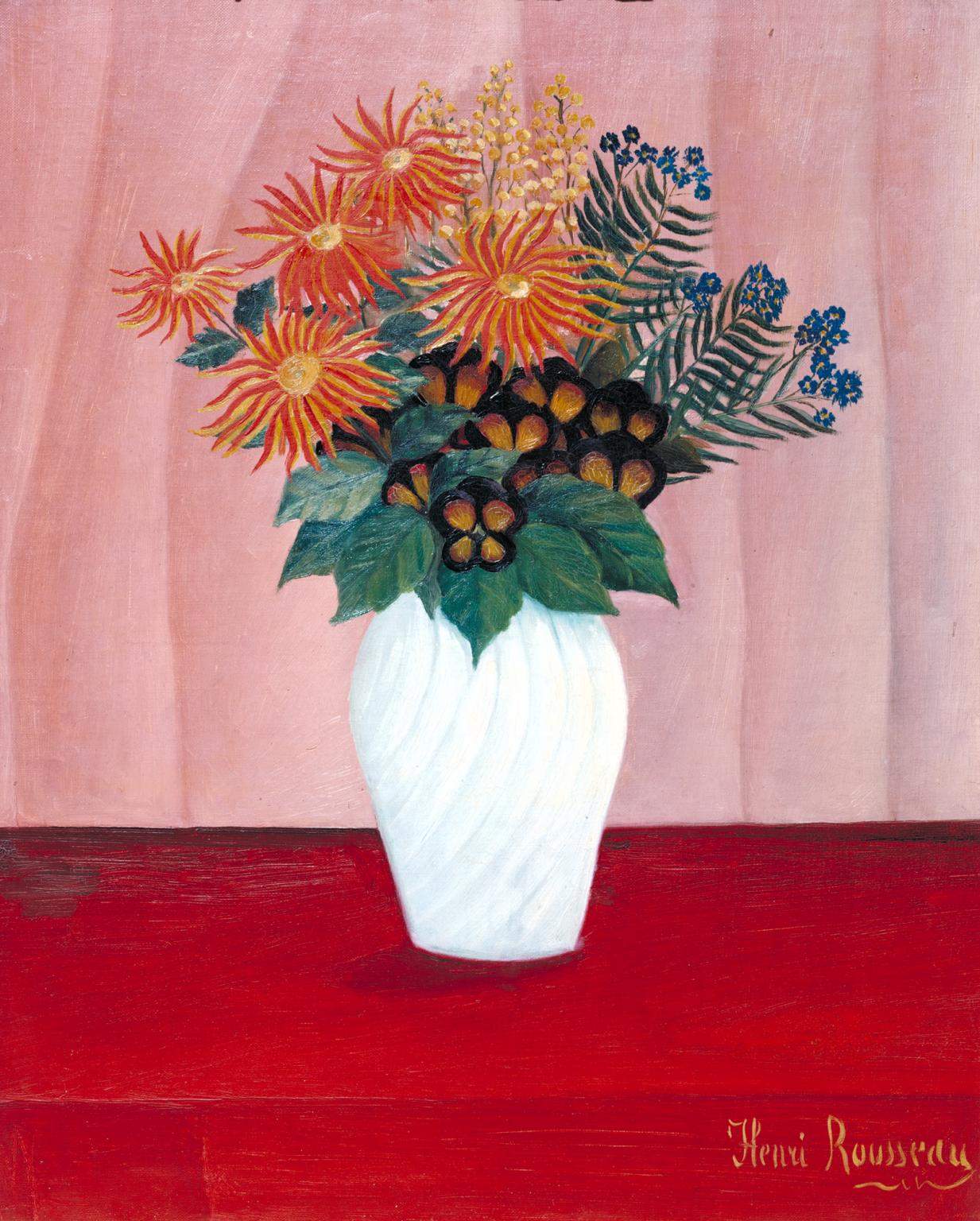
Bouquet of Flowers (c.1909–10)
Tate
Once dismissed as unrefined, naïve painting ( a style of visual art created by self-taught artists who lack formal training in classical techniques like perspective and anatomy ) — loose lines, flattened perspective, deceptively simple marks — is now being read as a deliberate stance against polish. Artists working in this space are seeing real institutional attention and sustained collector demand, precisely because the work reads as instinctive rather than optimized.
Why it’s ranking with buyers: it’s the most legible, easy-to-explain version of the “human-made” trend, which makes it an entry point for newer collectors who want authenticity without needing an art history degree to appreciate it.
2. Punk and Grunge Textures Return
Rough surfaces, cut-outs, raw typography, and layered material disruption are back — not as a stylistic throwback, but as a pointed reaction to the visual cleanliness of digital culture. This aesthetic builds directly on a lineage running through Basquiat-era fragmentation, and it’s showing up in gallery programming as a form of resistance to frictionless, over-produced imagery.
3. Personal Mythology in Surrealism
Surrealism in 2026 isn’t about a shared subconscious anymore — it’s hyper-individual. Artists are building inner worlds from private symbols and psychological narrative rather than universal dream logic. Recent strong auction results for narrative-driven surrealist work are reinforcing collector confidence in art that reads as unmistakably authored by one specific person.
4. Craft Materials Move to the Center
Ceramics, textiles, quilting, and fiber art — historically siloed as “craft” — are now squarely inside the fine art conversation. This runs parallel to the human-made trend: these mediums are slow, tactile, and hard to fake, which is exactly why they’re gaining museum attention and market cachet after being overlooked for years.
5. Texture and Material Presence Over Flat Digital Polish
Across mediums, there’s a broader hunger for physical presence — thick surfaces, mixed media, visible layering — as a counterweight to years of flat, screen-native imagery. Artists are increasingly treating materials themselves as part of the meaning of the work, not just a vehicle for an image.
Why “AI-Proof” Art Is Winning Right Now
Zoom out and all five trends point to the same underlying driver: in a market suddenly saturated with machine-generated visuals, provable human authorship has become scarce — and scarcity is the oldest pricing signal in art.
That shows up in concrete ways:
- Process transparency as marketing. Studio visits, live demonstrations, and behind-the-scenes content aren’t just promotion anymore — they function as proof of authorship, which is increasingly part of a work’s perceived value.
- A “K-shaped” market. Blue-chip and secondary-market art are seeing steadier demand from experienced collectors, while emerging contemporary work is more selective — buyers are being pickier about what justifies its price, and authenticity is one of the clearest justifications.
- Direct-to-collector sales growing. More artists are selling straight to collectors rather than through third-party platforms, shortening the distance between maker and buyer and reinforcing the personal, human element of a purchase.
What This Means If You’re Collecting in 2026
If you’re buying art this year, a few practical takeaways follow directly from these trends:
- Ask about process, not just provenance. Work with a visible, documented human process — sketches, studio photos, artist statements — is increasingly part of what you’re paying for.
- Don’t overlook craft mediums. Ceramics, textiles, and fiber art are undervalued relative to where institutional interest is heading.
- Look past technical perfection. A technically “imperfect” piece with a strong, specific point of view is currently more in demand than a flawless but generic one.
- Consider the under-$2,000 market. More collectors are entering at accessible price points and buying directly from artists, which is reshaping who gets to participate in collecting at all.
What This Means If You’re an Artist in 2026
The market signal for artists is fairly direct: leaning into visible process, personal narrative, and hands-on materials is not a step backward from “professional” polish — right now, it’s a competitive advantage. Documenting your process isn’t just content marketing; it’s becoming part of how collectors verify and value the work itself.
FAQ: Contemporary Art Trends 2026
NFT
Is AI art still popular in 2026? AI-assisted and AI-generated work hasn’t disappeared, but its novelty premium has faded. As machine-generated imagery becomes common, the market is increasingly rewarding work that visibly couldn’t have been made by a model — which is pushing demand toward hand-made, process-driven art.
What art styles are trending in 2026? Naïve painting, punk-grunge textures, personal-mythology surrealism, craft mediums like ceramics and fiber art, and heavily textured mixed-media work are among the strongest current trends, unified by an emphasis on visible human authorship.
Is now a good time to start collecting contemporary art? Growth in the affordable original art market (particularly under $2,000) and more artists selling directly to collectors have lowered the barrier to entry compared to previous years, though the higher end of the market remains more selective.
Why are collectors paying more for “imperfect” art? Because in a market with an oversupply of technically flawless, machine-generated imagery, visible human imperfection has become a rarer — and therefore more valuable — signal of authenticity.