The Mona Lisa: What Makes it a Masterpiece?

The Mona Lisa: What Makes it a Masterpiece?

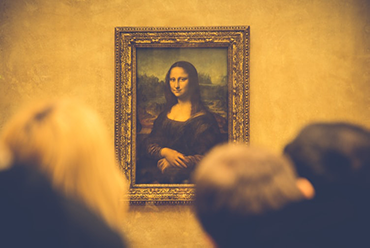
The Mona Lisa is arguably the most recognizable piece of art in the world. But, what makes Mona Lisa a Masterpiece?

Her enigmatic smile,- despite being debated continuously amongst historians and art scholars, there’s still great speculation about the identity and the meaning behind da Vinci’s painting.

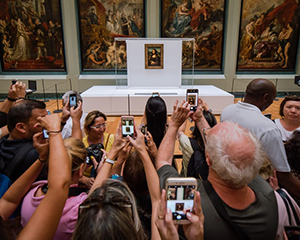
Enthusiasts come from everywhere around the world just to see her. Thousands of visitors line up daily to take a look at the masterpiece that has been carefully kept for centuries.

There are many reasons for her fame that make up for an interesting story and help explain her enduring popularity. To understand why this work remains iconic after so many years, we have to look at its mysterious origins, groundbreaking art techniques and the influence it still has on other artists and art movements.

So, what is behind that ambiguous smile? Today I will be breaking down and analysing what makes the Mona Lisa a Masterpiece.

Historic Context: Where Does She Come From
Leonardo da Vinci, the Italian polymath and multidisciplinary artist from the Renaissance era who created some of the world’s most iconic works, painted the Mona Lisa over several years during a large period of his life.

da Vinci should have completed the Mona Lisa around 1503. However, records show that the artist kept on working on the painting after 1503, and probably didn’t finish until he died in 1519. When da Vinci left Italy to become King Francis I’s protégé, he took the Mona Lisa with him. Right before da Vinci died, he sold what was to be considered the biggest masterpiece on earth, to King Francis for 4,000 gold coins.

Since then, the iconic painting has been passed on to the hands of kings, presidents, museums and private collectors, – from Louis XIV to Napolean Bonaparte.

She’s finally found a permanent home now. This enigmatic figure has been under Louvre’s protection for decades now, where she currently remains after a dispute between the U.S. President John F. Kennedy and the rest of Europe claiming the masterpiece as a heritage symbol.


The origin behind her name comes from what’s thought to be a portrait of Lisa Gherardini, wife of an Italian silk merchant named Francesco del Giocondo. Mona Lisa’s alternative name is La Gioconda due to who it was commissioned to.

But here’s where things get complicated now: apparently yes, – Mona Lisa is a commissioned portrait of Giocondo’s wife Lisa. And I do believe in that.

However, speculation surrounding the iconic piece suggests that the Mona Lisa is just a feminized version of Leonardo da Vinci himself… But I will dive into that later on, so you might as well keep reading!

Techniques

To create a masterpiece you have to be a master yourself. And Leonardo da Vinci was an absolute genius. Drawing, painting, sculpting, da Vinci was also an engineer, a scientist, an architect and a theorist,- a man of many talents you may say.

Through a series of innovations in technique and practice, which are still taught to this day, this Italian polymath has revolutionized the art world when he painted the Mona Lisa.

Unlike other paintings of the 16th century, the Mona Lisa is a very realistic portrait of a real person. Scholars have attributed this sort of accomplishment due to the artist’s brush and colour blending skills. Mona Lisa’s softly sculpted face shows how innovative da Vinci was in regards to exploring new techniques.

Sfumato was one of them, you can see that da Vinci utilizes light and shadows to model form in a way that reveals the skull below the skin. The veil delicately painted, the hair finely worked on, and the fabric carefully rendered all show intense careful observation.

In addition to its incredible technicalities, the woman’s soft smile is incredibly alluring. There’s also a thing called the Mona Lisa Effect: The resonance of her facial expression depends on the angle from which the viewer approaches it. From one viewpoint she looks cheerful and happy; and from another one, for some viewers, it is difficult to tell if she is simply smiling or not at all.

Although the Mona Lisa Effect is revolutionary by itself, she is also the earliest Italian portrait to include a full-length figure with arms. She is shown resting against a column staring out into the horizon behind her. The picture frame lies on the columns and creates a window effect that looks out over both distance and foreground.

Her Unique Face and Smile
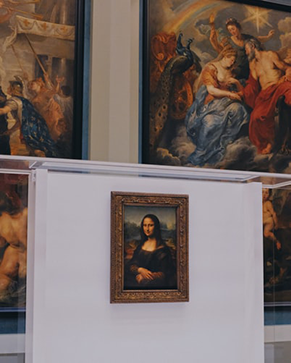
As I said just now, her expressionless gaze can follow you around the room. And her powerful stare continues to captivate all who encounter her.

After 500 years of enduring those who have let themselves be lost in contemplation of her mocking smile, the Mona Lisa still maintains intense eye contact with everyone that lets themselves be absorbed by her image. I have to admit, I’ve been to the Louvre before just to see her and it made me feel uneasy, to say the least…

Art historians have proposed numerous theories for the fascination with Mona Lisa. Most medical hypotheses examine dental problems, facial paralysis and even thyroid issues as evidence of her captivating face.

One theory explaining the Mona Lisa’s smile hinges on entertainers who would have made the model laugh during the painting process, allowing Leonardo da Vinci to capture this unique and slightly stifled smile.

It is also rumoured that there are secrets and hidden symbols behind her alluring expression. The buzzing masterpiece is still a hot topic of discussion when it comes to who the model actually is.

With theories suggesting that the iconic woman could be inspired by random Italians posing for da Vinci, including da Vinci himself. But, despite these side theories, a note written by Agostino Vespucci in 1503, indicated that Leonardo da Vinci told him he was working on a painting to the wife of Giocondo, who commissioned the piece.

Art historians generally agree that Mona Lisa is actually Giocondo’s wife.

Scholars have also speculated that Leonardo created more than one version of the Mona Lisa. In addition to the original commissioned by Gherardini del Giocondo, there is a second version painted in 1513 and believed to be commissioned by Giuliano de Medici. The latter is said to be exhibited at the Louvre.

Becoming an Icon
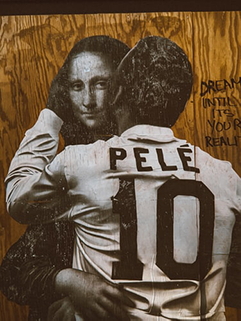
Due to Mona Lisa’s ambiguous gaze and mysterious face, this timeless masterpiece has been the subject of mocking, idolization, deep analysis and studies, commercial appropriation and meme culture content. People have adopted her as an international symbol of the arts. Her inconspicuous origin has been a discussed theme that has been buzzing for decades.

Mona Lisa is one of the most copied and reproduced paintings in the world. Since its creation, artists have appropriated her image, from Leonardo’s contemporaries to modern painters.

Duchamp took a postcard of the Mona Lisa and added a moustache and goatee. Artists like Warhol, Dali, Basquiat and Banksy have made their own interpretations of her in a variety of styles, including painting her as a dinosaur, unicorn, and even sporting sunglasses and Mickey Mouse ears.

What Really Made the Mona Lisa a Masterpiece
Despite all the theories, speculation, mockery and idolization behind this iconic figure, what turned the highly valuable piece into a Masterpiece was more than just the revolutionary art techniques.

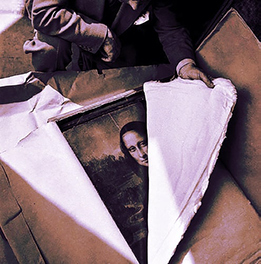
For centuries, the Mona Lisa hung quietly in the Louvre. But, on August 21, 1911, Mona Lisa was stolen right off of the museum’s wall during a heist, shooking up the art world.

Suspicions were widespread as the Louvre shut for a week so investigators could collect pieces of the puzzle. Initially, conspiracy theories abounded, claiming that it was all a publicity stunt orchestrated by the Louvre or perhaps Pablo Picasso had taken it.

After more than two years, an Italian carpenter working at the Louvre back in 1913 was accused of stealing the Mona Lisa from a Florentine art dealer who received information that it was out there. The French police found Vincenzo Peruggia, who admitted he had stolen the painting to duplicate it and resell it, claiming it belonged in an Italian museum rather than a French one.

From the day that Mona Lisa was returned to the Louvre, it didn’t take long for people from all around the world to make pilgrimages and admire her genius.

Since then, the masterpiece has been subject to various attacks. She has suffered an acid attack, a rock being thrown at her and a clay mug too. Who would’ve thought such an enigmatic and mysterious work would cause such a ruckus…

But there you have it. Due to all the hype and the interest, the several cultural resets it has accompanied, the artistic techniques it has shaped and the overwhelming buzz it has made, the Mona Lisa is indeed a masterpiece for all its history, – not just because of its genius, but because it has had an impact in so many different settings and social contexts.
Curiosities

  • The Mona Lisa is valued at $100 million. With inflation, this work of art would cost more than $867 million as of January 2021.
  • The painting measures just about 77 cm x 53 cm.
  • Because of it being stolen and a victim to multiple attacks, the painting is now housed behind a bulletproof glass to protect her from vandals.

Conclusion

  • The Mona Lisa is a painting made by Leonardo da Vinci. It’s thought to be a portrait of Lisa Gherardini, wife of an Italian silk merchant named Francesco del Giocondo.
  • Unlike other paintings of the 16th century, the Mona Lisa is a very realistic portrait of a real person. Scholars have attributed this sort of accomplishment due to his brush and colour blending skills called sfumato.
  • The Mona Lisa Effect: From one viewpoint she looks cheerful and happy; and from another, for some viewers, it is difficult to tell if she is simply smiling or not at all.
  • It is also rumoured that there are secrets and hidden symbols behind her alluring expression. The buzzing masterpiece is still a hot topic of discussion when it comes to who the model actually is. One theory believes it’s a feminized self-portrait of da Vinci.
  • Due to Mona Lisa’s ambiguous gaze and mysterious face, this timeless masterpiece has been the subject of mocking, idolization, deep analysis and studies, commercial appropriation and meme culture content. People have adopted her as an international symbol of the arts. 
  • Mona Lisa is one of the most copied and reproduced paintings in the world.
  • Despite all the theories, speculation, mockery and idolization behind this iconic figure, what turned the highly valuable piece into a Masterpiece was more than just the revolutionary art techniques. 
  • The masterpiece has been subject to various attacks and scandalous theft. She has suffered an acid attack, a rock being thrown at her and a clay mug too.
  • The Mona Lisa is indeed a masterpiece for all its history, – not just because of its genius, but because it has had an impact in so many different settings and social contexts.

Artists Guide: Making a Living as an Artist

Artists Guide: Making a Living as an Artist

Being an artist looks fun and glamorous, but the average painter, sculptor, and performance artist rarely get to live those eccentric lives we’re used to seeing on media outlets – or at least, most of them.

Sure, fine artists who show their work regularly in established galleries are more likely to earn more. They are established artists, so their work is recognized and highly valuable. Yet, that’s nothing but the tip of the iceberg as far as the kind of work and earnings other artists do.

Artists typically earn their living within four ways: commissioning works, selling finished pieces physically and online, teaching, or taking visual artist gigs for commercial studios.

Artists have also been made icons of poverty and struggling for centuries. But this is often not the reality of the situation… While starving or excessive wealth is considerably romanticized, people often make an adequate living out of the arts.

But let’s go back to the beginning of it all. Before earning an income, what does it take to make a living as an artist?

The Arts Industry

Let’s start with an introduction to the Arts Industry. The arts are not only valuable in and of themselves, but they also play a key part in countries economic success.

Take New York City or London for example, – the cultural capitals of the world. Arts and the Cultural Sector can have a great economic impact via expenditures and receipts from various activities. Like Broadway, Off-Broadway theatre productions, museums and art galleries, auction houses, shows and so on.

It’s a very profitable growing industry that attracts millions and can be linked to the Entertainment Industry, Technology and Tourism. By promoting the creation of new work posts, new businesses’ and constantly adapting to society’s needs, this industry is well adapted and there’s always space for new and upcoming artists.

Unless you want in on the rich and glamorous bit of it like Koons or Hirst… It might be harder to make a living like that then. Believe me, it’s not from lack of trying…!

Education

Although artists may be exceptionally talented without formal education, most visual artists tend to pursue a secondary education.

Most artist’s academic journeys often include a Bachelor of Fine Arts (BFA) or Master of Fine Arts (MFA) degree from an art school that is accredited by National Associations or Schools of Art and Design.

For art majors, being critiqued is part of their studies. Having feedback from peers or professors that still practice what they teach will get a prospective artist ahead. Art students also study art history and fundamental techniques of various creative practices, giving them an advantage, – regarding their knowledge of multidisciplinary skills.

Usually, the Universities and Art Schools provide great opportunities to show prospective collectors or future employers student’s work, by typically doing a degree show, a presentation of a student’s latest project, organizing talks and conferences, exhibition events, or by simply showcasing their portfolio.

Experience

What most people don’t know is that most artists have parallel jobs while making art. And that’s actually very beneficial. While taking in other job activities, artists can also gain other skills that are always favourable for future gigs.

Artists income can increase with each level of experience. Exposure and a diverse set of skills and settings make the artist more desirable and interesting to potential clients. It can also make you ready to take on different job positions, – related to your practices of course.

So, if you’re not making it as a full-time artist yet you can also consider starting a career as something else…

A background in visual arts may lead to jobs such as museum technician, conservator or art director, – a position that entails supervising other artists. Their salaries range from $47.35 per hour for those self-employed with five years of experience or more. Not bad, right?

Growth Trend

According to the BLS (The U.S. Bureau of Labor Statistics), job demand for visual artists is expected to grow by a modest 1% between now and 2029. An estimated 300 new creative job positions will be created in addition to vacancies from retirements and job changes.

However, when the economy reaches a lower point, it will probably be more difficult for freelance artists to sell their work because potential buyers may have less disposable income.

Types of Artists

To pursue a career in the arts as nothing but an artist, there are various occupations you might want to consider.

With the right education, volunteer work, internships, and and art major, artists can find success in a variety of disciplines.

Fine arts, crafts, digital art, illustration and multimedia to name a few vocations. They’re all different types of visual arts. Ones more prestigious than others, but they’re all subcategories that fall under the Artist umbrella.

Traditional Artists

Traditional artists specialize in the design and making of handmade objects. These are typically sold to the general public through commissions, shops, online or dedicated craft fairs. However, established craft artists might have work showcased in museums and art galleries.

The role of a traditional/ craft artist is to produce original handmade works from a variety of materials, including glass, paper, fabric, metal, ceramics and wood. Perfect for those who like to create things by hand.

Illustrators

Illustrations can be the pictures used in magazines, books, calendars, and so on. This area is great for those who like to work with a wide range of styles, whether to create work for a fantasy novel, a diagram in a medical text or to draw portraits in courtrooms.

There are many different methods creators use to make illustrations. Some artists work for media companies or do their own freelance illustrations.

Illustrators work is usually based on commissions by companies or private bodies. There are agencies you can work in, publishing companies for children’s books for example, or you can also produce editorial or authorial illustrations for magazines or posters.

Multimedia Artists and Animators

Multimedia artists and animators create films, video games or other special effects for specific companies.

They may specialize in just one aspect of the production process, such as creating only special effects for movies or designing background graphics.

Some multimedia artists and animators do their work by hand, sketching characters on paper with a pencil; while others use only digital tools to create something like fully digital NFT artworks. These artists are usually hired to work for companies, however, most creatives in this do freelance work.

Fine Artists

Now, the most “prestigious” one: Fine Art. Fine artists are often known for producing realistic depictions of people or objects. They usually specialize in paintings, sculptures or prints. These artists work with traditional materials like graphite, ink or acrylic paint; they may also use clay, stone or other classic materials too.

Fine artists work in all types of settings, including studios and outdoors. Formal training is not a requirement for artists because talent is innate (,- or not, but I’ll discuss that another time), however, and as I mentioned before, many artists do still prefer formal training to sharpen their skills.

Artists may sell their work privately, offer it through an exhibition gallery, or work for an organization that owns the rights to their artwork.

Most fine artists are self-employed by trade. Though many have other jobs on the side as well, it’s more common to see fine artists practising full time rather than other artists.

Salaries and Prospects

Artist’s Anual Income

The BLS does not break down data on wages earned solely through the sale of artwork. Still, according to their data, back in 2018, the average annual wage for fine artists is $53,400.

On the other hand, traditional and fine artists earned around 10% of a salary of $32,210. This means that 90% earned more than this amount. So, if 90% of the artist’s salary is $70,210, this can only mean that 10% of these artists earn more. In 2018, almost 60,000 individuals were employed in the fine art/ craft artist sector.

Economic Prospects

The state of the economy affects a fine artist’s ability to find work and earn enough money for basic living expenses. In an economic downturn, it is more difficult for artists to sell their work because buying art is optional.

The BLS predicted that the number of jobs available for artists would grow slower than average, with a growth of almost 10% from 2010-2020… But we were not expecting a sudden global pandemic… So now things are a little bit different, and if numbers were low before, right now they are at their ultimate low.

So here’s my advice to you considering the tough times we’re all going through; As a professional in this industry, if you want to make it as an artist and support yourself through your work, you need to balance a parallel job… Trust me, it might take a while until everything’s back on track again.

Disadvantages of being an Artist

Right, so we’ve discussed some of the most important options, prospects and requirements to consider before jumping in on the decision of becoming an artist and making a living from it.

Few artists are lucky enough to be born with natural talent that can lead them to a stable career and reliable source of income. But unfortunately, many artists spend years continuing their education or perfecting their skills only to find themselves searching for a steady paycheck from a different source of income.

Making a living as an artist is more about passion than it is about the benefits. And here is why:

Unpredictable Income

The popular term “starving artist” became coined because most artists can’t support themselves through art alone.

The Bureau of Labor Statistics reports showed that only the most successful artists are able to live on their artwork. Back in 2010, you would only be considered an artist if your salary was less than $9.10 an hour and if you had at least one other job. Thankfully tho, now it’s advisable that you take on other side jobs, it helps you gain experience.

Inconsistent Scheduling

Artists looking to make a living off of selling their art often have to work very hard. They must take time out of showcasing their art in galleries, visiting museums to show their work, or working from home.

Multimedia artists who similarly work from home also need to put in about 50 hours per week and maintain creative and dependable reputations.

Lack of Support

Artist employment is largely impacted by the amount of charity that goes to the arts. Although charitable donations are declining, and while interest in this occupation has persisted and led to a larger window of qualified candidates, income levels have decreased.

This will lead to a continuous battle for prospective employees trying to get sponsorship grants or gallery display privileges after this year of economic recess.

General Downsides

Making a living out of this notable profession can definitely be challenging, it’s important to not lose focus. If you want to become successful in this field, you’ve got to be ready to face a lot of obstacles.

Learning to be a professional artist is about gaining natural talent that can be transformed into profit. For those who already make a living as an artist, it’s necessary to keep improving their skills each time in order to maintain their place in the industry.

The exposure to materials required for the job can potentially have harmful impacts as well. The BLS notes that although most studios are properly ventilated, artists should be careful about their daily exposure to paint and ink fumes which is a concern to have.

Always have a plan B or a side job with a more consistent pay that can both benefit you financially and in terms of acquiring skillsets that you can later use on your creative process. You’ve got to be prepared to accept badly paying jobs too, to gain visibility and exposure.

Conclusion

  • Arts and the Cultural Sector can have a great economic impact via expenditures and receipts from various activities. It’s a very profitable growing industry that attracts millions and can be linked to the Entertainment Industry, Technology and Tourism.
  • To make a living as an artisit, its not obligatory but getting a Bachelor of Fine Arts (BFA) or Master of Fine Arts (MFA) degree from an art school that is accredited by the National Association on Schools of Art and Design, can be considered essencial.
  • Artists income can increase with each level of experience. Exposure and a diverse set of skills and settings make the artist more desirable and interesting to potential clients.
  • ine arts, crafts, digital art, illustration and multimedia to name a few vocations. They’re all different types of visual arts, – ones more prestigious than others, but they’re all subcategories that fall under the Artist umbrella.
  • Most fine artists are self-employed by trade. Though many have other jobs on the side as well, it’s more common to see fine artists practising full time rather than other artists.
  • According to BSL data, the average annual wage for fine artists is $53,400.
  • Making a living as an artist is more about passion than it is about the benefits.
  • Making a living out of this notable profession can definitely be challenging, it’s important to not lose focus. If you want to become successful in this field, you’ve got to be ready to face a lot of obstacles.

Digital Art vs Traditional Art: Which one Is Better?

Digital Art vs Traditional Art: Which one Is Better?

The Digital Art vs Traditional Art debate has been ongoing for quite some time now… Ever since the introduction of digital platforms and mediums, art has adapted and adopted many different forms throughout the years in order to fit the ever so changing times.

Digital artists have always stood by their work, claiming that digital art is every bit as “real” as traditional works. Traditional artists, on the other hand, consider digital art a form of “cheating”, “fast and easy art”, and “fake”. Some might even say that digital creators don’t make enough effort to be considered real artists.

It’s a controversial topic with no clear answer yet… However, for every valid argument that supports traditional art over anything else, digital art is the industry’s preferred medium for commercial products and here is where the line gets blurry…

Is Digital Art Actually Easier?

Some people in the art community see technology as a threat to originality and are concerned that it will replace traditional artmaking. This idea can certainly be worrisome for some artists and art institutions like museums and galleries who rely heavily on traditional works.

Of course, not all artists have the same opinion on the subject. Some traditional artists are receptive towards digital art. Others see digital art as: “Computer, draw me a person,” and a portrait suddenly appears on their computer screen. This is certainly not how digital artists work most of the time…

Digital art can be easier sometimes,(- and I will list you the pros and cons later on) but it’s not easier from the knowledge and actual skills perspective. Digital artists must understand drawing and painting fundamentals, composition, techniques, colouring, etc.. and those are only a few skills that come from knowledge and experience and absolutely no software is a replacement for any of those criteria.

So it is definitely not true. Digital Art isn’t necessarily easier, because some artists can take longer amounts of time and effort working with different softwares and mediums than those who only work with traditional mediums.

Is Traditional Art Dying?

The question has been asked a lot especially recently with all the NFTs hype going on. But my answer is that traditional art is not dying and it probably will take decades for that to ever happen.

It is true that while the traditional commercial industry medium is physical art, a large part of it has turned to digital media. Still, galleries, museums and auctions houses still see a lot of value and profit in traditional works.

Many people want a “real” painting on their walls. And it is in fact, a different experience that digital art can’t quite recreate yet.

Just like traditional artists, digital artists employ the same kind of skills but just with different tools. Using a computer to draw does not lessen the effort involved in creating art; it is simply done in a different manner from what many are used to.

Traditional vs Digital

Both digital and traditional art are similar in many ways, but also very different. To compare the two more closely, here is what each has to offer:

Traditional Art Pros

Traditional art is defined as any artwork made using physical media.

Skills
Obviously, it’s not just for traditional artmaking that you need a good set of skills. But it’s where you start. In order to to succeed in any art form you need to learn the basis of art-making which begins in a traditional setting.

Colour theories, composition, drawing styles, graphic and stylistic expressions, techniques, experimentation with materials, textures, brushes, pencils and so on, you only get to understand and gain the fundamental knowledge a posteriori.

Imperfections
Traditional art’s uniqueness is one of its most cherished benefits. Sure, you can scan the artwork and modify an existing copy as your own, but then it’s no longer considered an original piece.

Moreover, those imperfections and unintended strokes are what make traditional art so beautiful and individualistic – they give each piece a sense of exclusivity almost.

Practicality
Creating traditional art doesn’t depend on technology. If you don’t have a connection or internet access, you can keep working…

Senses
Traditional artwork comes with a different type of beauty that can’t be reproduced digitally. It is touchable, it has textures and unique colour mixing that we can’t enjoy as much over a computer screen.

Traditional Art Cons

Lighting
A traditional artist’s work as a physical object requires light. If an artist were to paint in the middle of the day, their work will be noticeably different at night because of how light changes.

Medium Limitations
Although you are working with the actual medium, all of them come with limitations on what they can do: such as how one material interacts with another or limited color options, impossible blending nad running out of supplies

Permanence
Traditional methods are typically unforgiving. There is no “undo” feature, and the line you put in can’t be made unpermanent.

Messiness
Working with traditional medium can be inconvenient and messy, requiring long hours of cleaning up, washing, putting things away and setting up and preparing all the materials one might need to start making an artwork.

Digital Art Pros

Digital art refers to the creations of artists who utilize technology in their work. Unlike traditional arts and crafts, digital artwork is typically created on a computer using various software programs.

Adaptability
Digital art does not have any limitations in what your finished work can look like. You could use a regular brush, or even watercolour brushes inside of an art program, and still be able to go back and change things from the original drawing.

Flexible Resources and Tools
Some artists feel like using these is cheating in a way. But do you think if a traditional artist could make use of them, they wouldn’t? You can flip a canvas, resize it, rotate it, shape elements, copy and paste things, smudge, adjust colours, and so much more…

Cheaper
Although it may seem that traditional art supplies are cheaper, they aren’t in the long run. Whenever you purchase an art supply that runs out quickly, you will have to keep making more purchases. That money really adds up! With a digital tablet, it won’t matter how much your work progresses because of its longevity and there is no need to constantly spend money on more materials.

Safer
There are many ways to protect your digital files on a computer, including copying them to an external hard drive, sending the file by email, and storing it in an online hosting site like Dropbox. However you choose to store and protect your digital works, remember that anything can happen: rain, dirt or greasy fingers can ruin the project you poured hours into.

Digital Art Cons

Laziness
The ability to undo mistakes, something that traditional artists have never been able to do, has changed how digital artists apply their medium. That can mean that the artwork is not the best version of itself.

Aesthetics
Some people like the “digital” look of digital art. Others think all digital drawings are boring and lifeless.

Unoriginality
In traditional paintings, the original work is typically worth thousands and millions of dollars. However, there are usually limited copies—prints costing $10-$200. With digital art as its is easier to reproduce, it becomes a point of contention whether digital art is real and valuable or not.

Printing
Although the digital art you have on your computer may look great, it will not resemble what you get when it is printed.

Can they be Interchangeable?

In addition to those who exclusively use digital mediums, many artists also blend the two approaches as their art practices. It’s actually very common to use digital tools in the making of a physical object.

Some professionals in the industry do not disdain digital tools, rather they prefer traditional methods like oil painting or sculpture which both take a great degree of time and practice.

Yet, physical art should never invalidate digital work that can serve as a tool to prepare pieces that have a traditional finishing. Digital softwares can complement traditional works by helping artists be more precise and rigorous with designing and sketching out an artwork.

Who Wins?

While it is true that digital art can allow certain features to be completed much quickly and easily, (- for example, a gradient in traditional art may take more than half an hour to create compared to the minute or two on most digital drawing softwares) it doesn’t mean that the work takes any less time nor does it negate its inherent value.

Sometimes digital art is seen as “less than” other forms of art, but in the end, there are more career opportunities for those who work with digital media.

In response to what has been said thus far, these 2 mediums serve as different yet the same. No one should put one or the other into a category of “better” art.

Ultimately, we need to look at the work that artists are trying to convey and how they executed it rather than whether it was drawn digitally or traditionally.

Conclusion

  • Some digital artists claim that digital art is every bit as “real” as traditional works.
  • Some traditional artists consider digital art a form of “cheating”.
  • Some people in the art community see technology as a threat to originality and are concerned that it will replace traditional artmaking. This idea can certainly be worrisome for some artists and art institutions like museums and galleries who rely heavily on traditional works.
  • Galleries, museums and auctions houses still see a lot of value and profit in traditional works. Many people want a “real” painting on their walls. And it is in fact, a different experience that digital art can’t quite recreate yet.
  • Digital Art isn’t necessarily easier, because some artists can take longer amounts of time and effort working with different softwares and mediums than those who only work with traditional mediums.
  • Digital softwares can compliment traditional works by helping artists be more precise and rigouros with designing and sketching out an artwork.
  • Traditional Art will not be replaced by Digital Art.
  • It’s important to look at the work that artists are trying to convey and how they executed it rather than whether it was drawn digitally or traditionally.
Add to cart